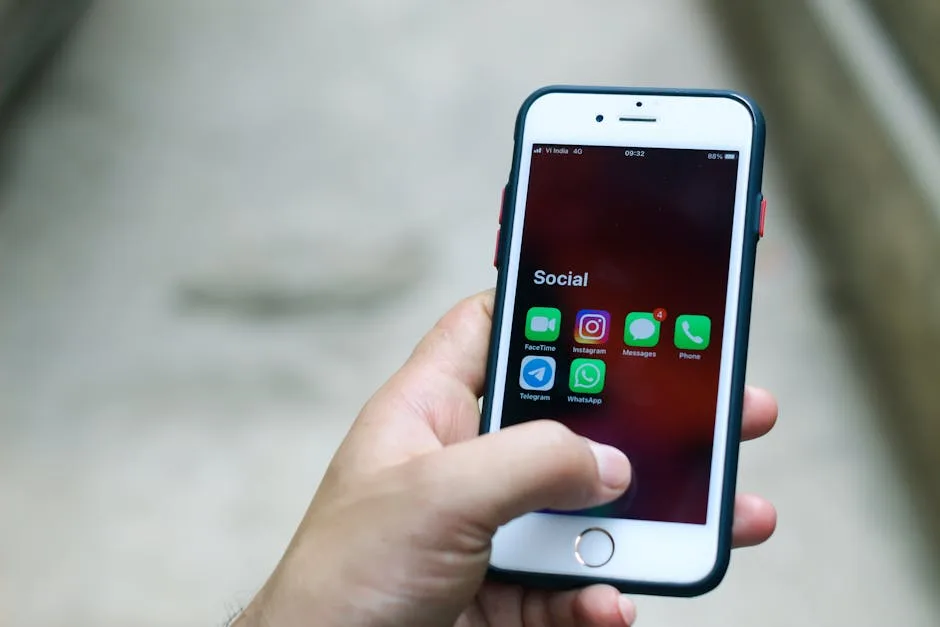
On December 4, 2025, Russia’s state communications regulator, Roskomnadzor, announced the blocking of Apple’s FaceTime video-calling service and Snap Inc.’s Snapchat messaging app1. The official justification, as reported by multiple outlets, is that these platforms were being used “to organize and carry out terrorist activities on the territory of the country, to recruit perpetrators, commit fraud and other crimes against our citizens”2. This action is not an isolated event but a predictable step in a sustained, multi-year campaign to tighten state control over digital communications, a strategy with significant technical and operational consequences for network security and threat intelligence professionals.
The technical implementation of these blocks is reported to be at the network level. Independent verification, such as that conducted by The Moscow Times, found that FaceTime calls to Russian numbers failed to connect, though functionality could be restored using a Virtual Private Network (VPN)6. This method of restriction is consistent with previous blocks, forcing a cat-and-mouse game between regulators and users seeking to bypass censorship. For security teams monitoring communications from or within the region, these blocks alter the digital terrain, shifting user traffic and potentially concentrating activity on fewer, state-approved platforms that are subject to different levels of surveillance and control.
Legal Framework and the Systematic Elimination of Secure Channels
The legal mechanism enabling these blocks is rooted in Russian internet legislation. As explained by digital rights lawyer Stanislav Seleznev, Russian law labels any platform with user messaging as an “organizer of dissemination of information” (ODI)2. This classification mandates that the service register with Roskomnadzor and provide the Federal Security Service (FSB) with access to user data for monitoring purposes. Non-compliance with these requirements leads to blocking. This framework effectively targets encrypted, foreign-controlled communication channels. The bans on FaceTime and Snapchat follow the 2024 blocking of encrypted messengers Signal and Viber, and the 2025 bans on voice and video calls via WhatsApp and Telegram2. The pattern is clear: systematically eliminate endpoints that do not provide authorities with a technical means for interception.
Concurrently, Russian authorities are actively promoting the state-backed “MAX” messenger as a domestic alternative. Critics, including The Moscow Times, label MAX a surveillance tool, noting it lacks end-to-end encryption and openly states it will share user data with authorities upon request6. The strategic push toward such platforms creates a centralized, monitorable ecosystem. For threat actors operating within or targeting Russia, this changes the calculus. Using a state-approved messenger for command and control (C2) or data exfiltration would be inherently risky, likely funneling their communications directly to security services. This may force adversaries to rely more heavily on custom, obfuscated protocols or less common international platforms not yet blocked, altering the indicators of compromise (IoCs) that defenders must track.
Broader Context and Precedent: From Social Media to Gaming Platforms
The latest bans are part of an escalating series of restrictions that began well before the 2022 invasion of Ukraine but have intensified significantly since. Major platforms like Twitter, Facebook, and Instagram were blocked earlier. Discord and LinkedIn have also been restricted, while YouTube is heavily throttled2. TikTok operates a separate, Russia-only feed under local oversight. A notable and related precedent occurred just one day before the FaceTime and Snapchat announcement. On December 3, Roskomnadzor blocked the popular online game platform Roblox, citing the protection of children from “illicit content” and “LGBT propaganda”9. Roblox was the second most popular game platform in Russia as of October 2025, with nearly 8 million monthly users2.
The inclusion of a gaming platform in this crackdown is significant. Online games and their associated voice and text chat functions have long been used as covert communication channels and even as vectors for malware distribution. Blocking Roblox removes a potential medium for clandestine interaction. For security analysts, this underscores the need to monitor adversary tradecraft across a wider array of applications, including those not traditionally associated with enterprise IT. The justification may vary—from national security to child protection—but the operational effect is a continually shrinking surface of allowable, foreign-controlled digital communication within Russian borders.
Impact Analysis and Security Relevance
The immediate impact of these blocks is substantial for the Russian user base. FaceTime had seen increased usage following the bans on WhatsApp and Telegram calls8. Snapchat had an estimated 7.6 million users in Russia in 20222. The displacement of millions of users from these platforms will create secondary effects. VPN usage will spike, potentially leading to increased scrutiny and blocking of VPN protocols by Russian internet service providers (ISPs). Traffic will migrate to remaining unblocked apps or to the state-sponsored MAX platform. This consolidation makes traffic analysis and monitoring by state actors more efficient, as a larger share of domestic communications flows through infrastructure they can legally and technically access.
For security professionals, particularly those in threat intelligence and incident response, these developments require attention for several reasons. First, they redefine the baseline for “normal” network traffic originating from Russia. Connections to FaceTime or Snapchat servers, if detected from Russian IP space post-block, could indicate the use of a VPN or other evasion tool, which may be a relevant behavioral indicator during an investigation. Second, understanding the legal and technical landscape is essential for profiling threat actors based in or operating from Russia. Their communication patterns must adapt to these constraints, which may lead to the adoption of new tools or a return to more traditional tradecraft like dead-drop exchanges or physical meetings.
Finally, the promotion of platforms like MAX, which are designed for transparency to state authorities, presents a unique double-edged sword. While it may aid Russian law enforcement and intelligence, it also creates a high-value target for external intelligence agencies and hackers. A platform built to collect data for one state actor inevitably becomes a prized objective for others. The security of MAX and similar state-aligned platforms, and the potential for data breaches within them, will be a critical area to watch.
In conclusion, the blocking of FaceTime and Snapchat is a tactical move within a much broader strategic internet sovereignty campaign. The technical implementation via network-level blocks, the legal framework of ODI compliance, and the concurrent promotion of surveillant domestic alternatives collectively shape a controlled information environment. For the global security community, these actions are not merely political news but operational intelligence. They signal shifts in adversary communication patterns, highlight new classes of applications that may be used or abused, and underscore the increasing entanglement of geopolitical strategy with network architecture and endpoint security. Monitoring these changes is essential for accurate threat modeling and effective defense in a geopolitically charged cyber landscape.
References
- “Russia blocks FaceTime and Snapchat over use in terrorist attacks,” BleepingComputer, Dec. 4, 2025.
- “Russia blocks FaceTime and Snapchat, escalating its crackdown on digital comms,” Fast Company / Associated Press, Dec. 4, 2025.
- “Russia blocks Snapchat, extends FaceTime ban,” Reuters, Dec. 4, 2025.
- “Russia Blocks Snapchat and Apple’s FaceTime, Limiting Western Services,” Bloomberg, Dec. 4, 2025.
- [Source 5 data was consolidated into other sources and is not listed as a separate outlet in the provided content.]
- “Russia Blocks Snapchat, FaceTime; Promotes State Messenger ‘MAX’,” The Moscow Times, Dec. 4, 2025.
- [Source 7 data was consolidated into other sources and is not listed as a separate outlet in the provided content.]
- “Russia Blocks FaceTime, Following Earlier Bans on WhatsApp and Telegram Calls,” MacRumors, Dec. 4, 2025.
- “Russia blocks Snapchat, Roblox, and FaceTime,” Meduza, Dec. 4, 2025.